There is a moment every checked-bag traveler knows: standing at the carousel, watching the same unclaimed duffel circle past for the fourth time, wondering if your suitcase made the connection. Carry-on only travelers never have that moment. They walk off the plane, past the carousel crowd, and into their trip. Traveling with only a carry-on is not about deprivation or wearing the same shirt for a week; it is a repeatable system that saves money on baggage fees, eliminates lost-luggage risk, and makes every airport, train station, and hotel transfer dramatically easier. Once you learn the method, it works for a weekend away or three weeks abroad.
Start With the Capsule Wardrobe Principle
The heart of the carry-on method is a small set of clothes in which everything works with everything else. Choose a base palette of two neutral colors, add one or two accent pieces, and make sure every top pairs with every bottom. When each of four tops matches each of three bottoms, you have twelve outfits from seven garments. Pattern-heavy or single-use items are the enemy; that bold shirt that only works with one specific pair of pants is quietly demanding double the space.
A useful starting formula for a week or more: four or five tops, three bottoms, one packable outer layer, one dressier option that can be layered, sleepwear, and enough underwear and socks for five to seven days. Adjust for climate, but resist adjusting for imagined scenarios. Pack for the trip you booked, not for the gala you might hypothetically be invited to. Fabrics matter as much as quantity: merino wool and modern synthetic blends resist odor, shed wrinkles, and dry overnight, which is what makes a small wardrobe function like a large one.
Let Packing Cubes Do the Organizing
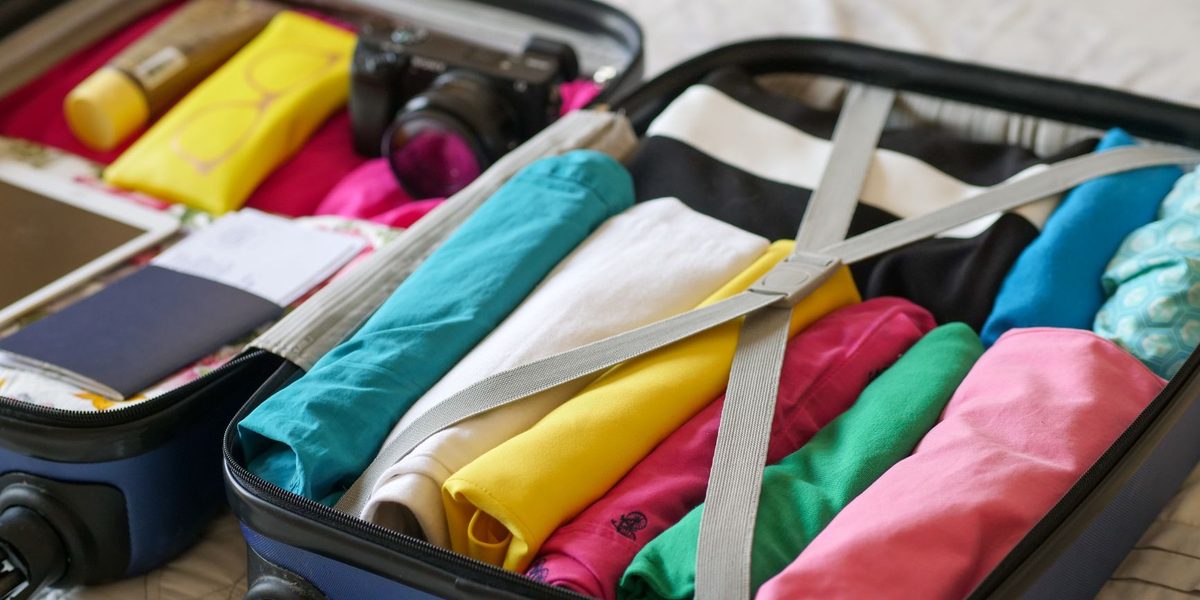
Packing cubes transform a suitcase from a pile into a filing system. Use one cube for tops, one for bottoms, and a small one for underwear and socks, and your bag stays organized through a dozen hotel changes because you never dig, you just lift out the relevant cube. Compression-style cubes squeeze out air and can reclaim a surprising amount of space, though be careful: the space you save has a way of inviting more stuff. The goal is a lighter bag, not a denser one.
Rolling clothes works well for casual knits and t-shirts, while folding suits structured items. Many experienced packers combine both: rolled items packed vertically in cubes so every piece is visible at a glance, with a flat fold reserved for anything that creases. Keep one thin, empty bag for laundry so worn clothes never mingle with clean ones.
Master the Toiletry Bottleneck
Liquids are where carry-on plans go to die. Security rules generally limit you to small containers that all fit in a single modest clear bag, so the strategy is to need fewer liquids in the first place. Solid alternatives have improved enormously: shampoo bars, solid deodorant, toothpaste tablets, and bar soap cover most of a toiletry kit with zero liquid allowance used. Decant anything that must stay liquid into small refillable silicone bottles rather than bringing full retail sizes.
Remember that hotels and rentals supply more than most packers assume. Shampoo, soap, and hair dryers are nearly universal, and pharmacies exist everywhere humans do. The carry-on mindset treats the destination as part of your supply chain: if you run out of something ordinary, buying it locally is a ten-minute errand, not a crisis.
Medications are the exception to the buy-it-there rule. Keep prescriptions in their original packaging in your personal item, along with anything your health genuinely depends on, and carry a couple of days' margin beyond your trip length in case of delays. For everything else in the kit, apply the same interrogation you applied to clothing: will I actually use this every day, or am I packing for a hypothetical? A surprising number of toiletry bags are two-thirds hypothetical.
Wear Your Bulk, Pack Your Light
The heaviest, bulkiest items you plan to bring should travel on your body, not in your bag. Wear the boots, carry the coat, layer the sweater over your travel outfit. On the plane you can stow the coat overhead or use it as a blanket. This single habit can free a third of a small suitcase, and it doubles as climate control for aggressively air-conditioned airports and aircraft.
Your personal item deserves equal strategy. A small backpack or tote that fits under the seat carries everything you need in flight and doubles as your daypack at the destination: electronics, documents, medications, a change of socks, and anything you cannot afford to have separated from you. Between the carry-on and the personal item, think of it as a two-container system with deliberate roles, not two bags packed at random.
Plan Laundry Like an Itinerary Item
The carry-on method trades luggage volume for a small amount of laundry effort. For trips beyond a week, plan one laundry event: a sink wash of quick-dry items every few evenings, a hotel laundry bag, or an hour at a local laundromat, which often turns into an oddly pleasant slice of everyday life abroad. A flat universal sink stopper, a small pouch of detergent sheets, and a travel clothesline weigh almost nothing and make any bathroom a laundry room.
- Every two or three nights: rinse quick-dry underwear and socks in the sink.
- Once per week: a proper wash for tops and bottoms.
- Fabric choice: quick-dry materials make overnight drying reliable rather than hopeful.
Once laundry becomes a scheduled routine instead of an emergency, a seven-day wardrobe covers any trip length, and the argument for a checked bag mostly evaporates.
Know the Payoff in Fees, Time, and Freedom
The financial case is straightforward: many fares now charge separately for checked luggage in each direction, and those fees repeat every time you fly. Frequent travelers who go carry-on only effectively give themselves a discount on every ticket for life. The time savings are just as real. You skip the bag-drop line on departure and the carousel wait on arrival, which can add up to an hour or more per journey, and you can accept tight connections and last-minute rebookings that checked-bag travelers cannot.
The less measurable benefit is agility. With one small bag, you can take the stairs, hop on the earlier train, walk the fifteen minutes to the hotel instead of waiting for a taxi, and change plans mid-trip without renegotiating with your own possessions. Do check your airline's carry-on size and weight rules before you fly, since limits vary by carrier and fare type, and a soft-sided bag with slight give is more forgiving at the gate than a rigid shell packed to bursting.
One caution keeps the system honest: on very full flights, gate agents sometimes require larger carry-ons to be checked at the door. Protect yourself by keeping everything irreplaceable, documents, electronics, medication, in the personal item that always stays with you, and by boarding in your assigned group rather than last. If your bag does take a detour to the hold, a well-run two-container system means you lose nothing but a few minutes at the carousel.
Final Thoughts
Packing light is a skill, and like most skills it feels unnatural exactly once. Build a small interchangeable wardrobe, organize it in cubes, solve toiletries with solids, wear your bulkiest items, and schedule laundry like any other itinerary stop. After one trip where you glide past the baggage carousel and straight into the city, the old overstuffed suitcase stops looking like preparation and starts looking like ballast. Travel is better when everything you need fits in the overhead bin.