Ask a search engine how to get between two cities and it will usually show you flights first, sorted by a number that measures almost nothing: time in the air. The real question, how long from your hotel door to your next hotel door, and in what condition you arrive, tells a different story, and on a striking number of routes the train wins it outright. Choosing between rail and air is not a matter of romance versus efficiency; it is arithmetic plus a handful of quality-of-life factors that flight search results systematically hide. Learn to run the comparison honestly and you will fly when flying is genuinely faster, ride when riding is better, and stop paying the hidden costs of the wrong default.
Do the Door-to-Door Math
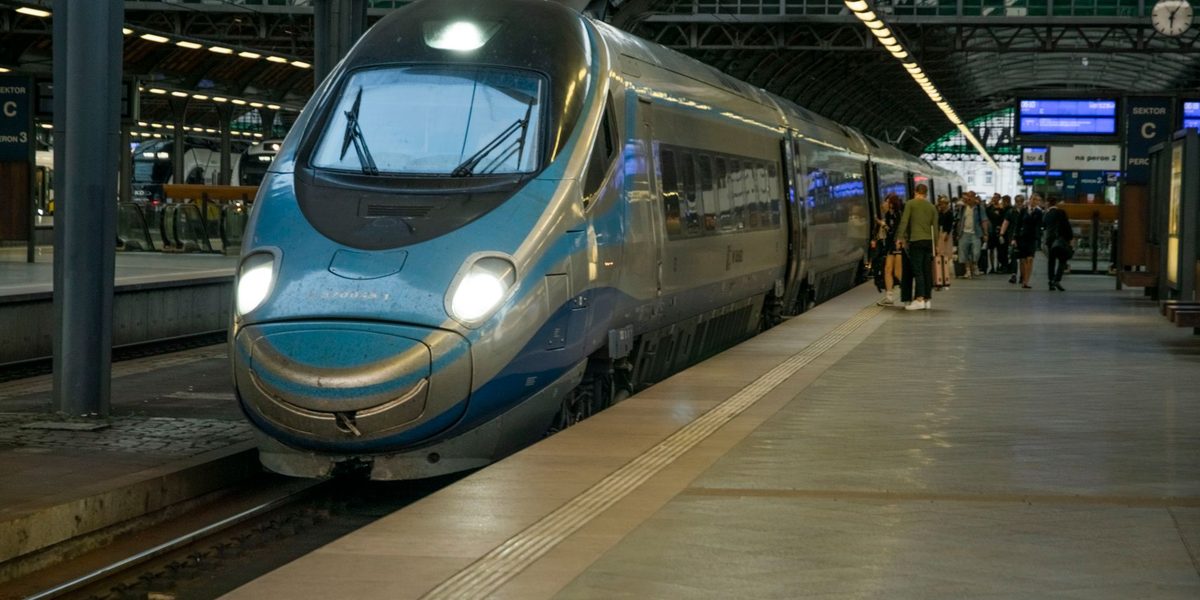
A flight listed at ninety minutes is never a ninety-minute journey. Add the trip to an airport built where land was cheap, the recommended arrival buffer, security, boarding, taxiing, baggage claim, and the transfer from the destination airport into town, and that hop routinely becomes a five-hour undertaking. The train's equivalent overhead is often fifteen minutes: walk into a central station, board, and step off in the center of the next city.
The practical crossover is worth memorizing as a rule of thumb: when the rail journey is roughly four to five hours or less, the train is usually competitive with or faster than flying door-to-door, and on dense high-speed corridors the crossover stretches even further. Run the numbers for your specific route: total every segment of each option, including the waits, and compare finished journeys rather than headline durations. The exercise takes five minutes and regularly overturns the search engine's verdict.
Count the Costs Flights Hide
Price comparisons suffer the same distortion. The advertised airfare excludes the expensive ground transfers at both ends, the baggage fees that rail travel simply does not have, the seat selection charges, and the meal purchased in a departure lounge at captive-audience prices. Train tickets are more honest: the price on the ticket is generally the price of the journey, luggage rides free within reason, and the station coffee costs what coffee costs.
Rail pricing does have its own texture. On many networks, high-speed and long-distance fares work like airfares, cheap when booked early, expensive on departure day, so the early-booking discipline transfers. Regional and commuter trains typically sell flat-rate walk-up tickets where timing does not matter at all. Learn which type your route uses before assuming either behavior applies.
Value the Hours, Not Just the Count
Even when total times are similar, the hours themselves are not equivalent. A travel day by air is chopped into fragments too short and too interrupted to use: a queue here, a boarding call there, electronics stowed for descent. The same day by rail delivers long, unbroken stretches at a table with power, connectivity on many services, and room to actually work, read, or sleep. For working travelers, a four-hour train ride can be the most productive block of the week; the equivalent flight day produces almost nothing but fatigue.
Comfort compounds the difference. Trains let you stand, walk, visit a dining car, and keep your belongings beside you. There is no dry cabin air, no seat-back negotiation, no moment when your luggage departs on a journey of its own. Travelers arrive at rail destinations noticeably fresher, which matters enormously when the evening of arrival contains a dinner, a meeting, or a first exploration of a new city rather than a recovery nap.
Let the Journey Be Part of the Trip
Some rail routes are attractions in their own right, coastlines unrolling outside the window, mountain passes, river valleys threaded by viaducts, and choosing them converts transit time from a cost into a highlight. Even ordinary routes offer something flying cannot: the continuous, legible experience of a landscape changing, farms becoming suburbs becoming the city you are about to know. Trips remembered years later are rarely remembered for their boarding groups. They are remembered for a river appearing beside the tracks at golden hour, a picnic unpacked at a fold-down table, an hour of unhurried conversation that an airplane's geometry never permits.
- Scenic legs deserve daylight: schedule famous routes for hours when you can see them, and sit on the recommended side, which a minute of research reveals.
- Night trains trade a hotel night for a travel night: a sleeper cabin covers hundreds of miles while you rest, arriving at breakfast with a full day ahead and one hotel bill avoided.
- Stations are destinations: many great rail halls are architectural landmarks worth arriving early for, an amenity no security queue has ever provided.
None of this requires being a rail romantic. It only requires noticing that transit hours are trip hours, and that some ways of spending them are simply better than others.
Buy Tickets and Passes Like a Local
Rail buying rewards a little literacy. Book long-distance and high-speed trains early through the operator's own site or app where possible, since third-party resellers sometimes add fees or obscure cheaper fare classes. Understand seat reservations: on some networks they are automatic, on others optional, and on busy routes an unreserved ticket can mean standing. For regional trains, buy at the station and board; scarcity pricing rarely applies. Validate tickets where local rules require it, since some systems expect you to stamp a paper ticket before boarding, and learn whether your route uses assigned cars, because sprinting down a platform toward coach twelve with one minute to spare is a rite of passage best skipped.
Multi-journey rail passes tempt many travelers, and the honest answer is that they pay off only for itineraries with many long segments in a short window. Price your actual planned journeys as individual advance tickets first, then compare against the pass, remembering that passes often still require paid seat reservations on premium trains. Flexibility is the pass's real product; if your dates are fixed, point-to-point advance fares usually win, and if you intend to improvise across many cities, the pass earns its keep. Run your own numbers rather than inheriting anyone's rule.
Know When the Plane Still Wins
Honesty cuts both ways. Over long distances without high-speed corridors, across seas, or wherever rail infrastructure is thin, flying wins decisively, and no door-to-door arithmetic will rescue a fifteen-hour rail slog against a two-hour flight. Time-critical trips with tight onward connections may also favor air simply because more departures per day mean more recovery options when something fails. And travelers with mobility considerations should check station accessibility on their specific route, since older stations can involve stairs and long platforms.
The point was never that trains always win; it is that the comparison deserves to be run instead of skipped. A traveler who defaults to flights misses the corridors where rail is faster, cheaper, and better all at once. A traveler who runs the five-minute comparison each time simply takes the better option, whichever it is, and over a traveling life that habit compounds into weeks of reclaimed time.
Final Thoughts
The plane-versus-train question has a method, not an answer: total the true door-to-door time, count the costs the airfare hides, weigh what the hours themselves will feel like and produce, and price tickets the way the network expects. Sometimes the runway wins, often the rails do, and the only consistent loser is the traveler who never checked. The next time two cities need connecting, spend five minutes on the arithmetic. There is a decent chance the best flight that day departs from a train station.