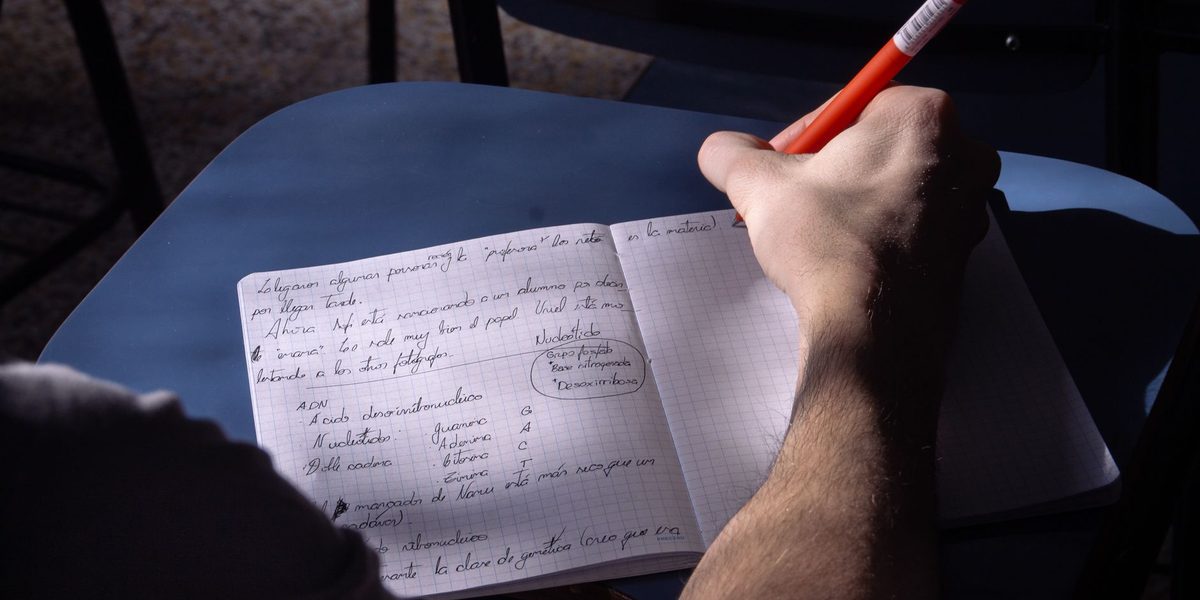
Walk through any lecture hall and you will see a dozen private systems in action: dense paragraphs, sparse bullet trees, diagrams sprawling across pages, laptops clattering at transcription speed, and at least one person writing nothing at all. Most students inherited their note-taking style by accident, from a middle-school habit or a roommate's example, and have never once asked whether it suits the way they think or the courses they are taking. That is a missed opportunity, because notes are not a record; they are a thinking tool. The method you use shapes what you notice, what you remember, and how easily you can study later. The major systems each have real strengths, and matching them to your brain and your subjects is one of the highest-leverage study upgrades available.
What Notes Are Actually For
Before comparing systems, it helps to name the job. Good notes do three things: they force you to process ideas during class rather than passively absorb them, they capture enough structure that the material can be reconstructed later, and they create a document designed for future review, not just present comfort. A perfect transcript fails the first test, since transcription requires no understanding. Beautiful notes that are never reread fail the third. The best system for you is the one that keeps you mentally active in the room and produces pages your future self will actually use.
This is also why the perennial handwriting-versus-typing debate misses the point slightly. Handwriting is slower, which forces summarizing and selection, and that friction is often useful. Typing is faster and more searchable, which favors dense, information-heavy courses. The deeper variable is not the tool but whether you are compressing ideas into your own words. A typist who paraphrases beats a calligrapher who transcribes, and many students settle on a hybrid, typing in fast courses and writing by hand where diagrams and slow thinking matter most.
The Cornell Method: Built-In Review
The Cornell system divides each page into three zones: a wide right column for notes taken during class, a narrow left cue column filled in afterward with questions and keywords, and a summary strip at the bottom where you compress the page into a sentence or two. Its genius is that the page itself enforces good study behavior. Writing cues and summaries forces a second pass over the material while it is fresh, and the finished page doubles as a self-testing device: cover the notes, read the cue, and try to recall the content.
Cornell shines in lecture-based courses with clear conceptual structure, such as history, psychology, or biology, and it is the strongest choice for students who know they will procrastinate on review, since the review is baked into the format. Its weakness is ceremony: the setup takes discipline, fast-moving or highly visual material can overwhelm the narrow column, and the method only pays off if you honestly complete the cue and summary steps rather than leaving elegant empty margins.
The Outline Method: Order for Structured Minds
Outlining arranges material hierarchically: main topics at the margin, subpoints indented beneath, details indented further. It mirrors how well-organized lectures are usually delivered, which makes it feel natural, and it produces tidy, scannable pages that make excellent exam review sheets. For disciplines built from nested categories, such as law, anatomy, business, or any textbook-driven course, outlining is hard to beat.
Its failure mode is rigidity. When a lecturer jumps around, tells stories, or builds ideas through discussion, the hierarchy collapses and outliners freeze, unsure where the current point belongs. Outlining also tempts students into cataloging structure without engaging meaning, capturing every heading while missing the argument. If your notes are immaculate but exams feel like ambushes, over-outlining may be the culprit, and blending in questions or brief summaries can restore the thinking.
Mapping and Visual Methods: Seeing the Connections
Mapping starts with a central concept and radiates branches of related ideas, producing a diagram rather than a page of lines. Charting, its cousin, organizes material into comparison tables with categories as columns. These visual methods excel where relationships matter more than sequence: theories that interlock, systems with feedback loops, literature themes, or any course where the exam will ask you to compare and contrast. Many students who feel word-blind in review sessions discover they can recall an entire map by its shape.
The trade-offs are capacity and speed. Maps hold fewer words than linear pages, so dense factual lectures overflow them quickly, and drawing takes time that fast lecturers do not grant. A practical compromise is to take linear notes live, then convert the material into maps or charts during review, which adds a processing pass exactly when memory research-style common sense says it helps most: shortly after first exposure.
The Sentence Method and Smart Transcription
The sentence method records each new idea as its own numbered line, in your own words, without worrying about hierarchy. It is the humble workhorse for chaotic situations: disorganized lecturers, rapid seminars, guest speakers, or unfamiliar subjects where you cannot yet tell structure from detail. Everything gets captured; organization happens later. The essential second step is that later, ideally the same day, when you group the sentences, mark the key ones, and impose the structure the lecture lacked. Skip that pass and the sentence method degrades into a wall of text nobody, including you, will ever reread.
Whatever method you use, a few habits raise its ceiling:
- Write in your own words wherever possible; paraphrase is comprehension in disguise
- Develop abbreviations and symbols for recurring terms in each course
- Leave white space for later additions, corrections, and questions
- Mark anything the instructor repeats, writes down, or flags as difficult
- Note your own confusions in the margin; they are a to-do list for office hours
These habits matter more than the system itself. A mediocre method used actively will outperform an ideal method used passively.
Match the Method to the Course, Then Iterate
The real skill is not loyalty to one system but deliberate matching. A single semester might sensibly use Cornell for psychology lectures, outlining for the textbook-heavy business course, charting for a literature seminar full of comparisons, and sentence capture for the professor who thinks aloud in spirals. Problem-based courses like mathematics need yet another approach, notes organized around worked examples with annotations explaining why each step happens, since the reasoning, not the arithmetic, is what exams test.
Give any new method two honest weeks before judging it, because the awkwardness of change masquerades as failure at first. Then audit results: when you review these notes, can you reconstruct the lecture? Did they surface in your exam preparation, or did you fall back on rereading the textbook? Adjust one variable at a time, keep what survives contact with real exams, and let each course teach you what it needs from you as a listener and a writer. By graduation, your note-taking should look like a toolkit, not a signature.
Final Thoughts
There is no single best way to take notes, only a best way for this brain in this course, and finding it is an experiment worth running early. Understand the job notes exist to do, learn the core systems well enough to deploy any of them, upgrade the habits that power them all, and match methods to material rather than habit. The payoff is not just better pages; it is better attention during class, faster review before exams, and the quiet confidence of knowing your past self left your future self something worth reading.