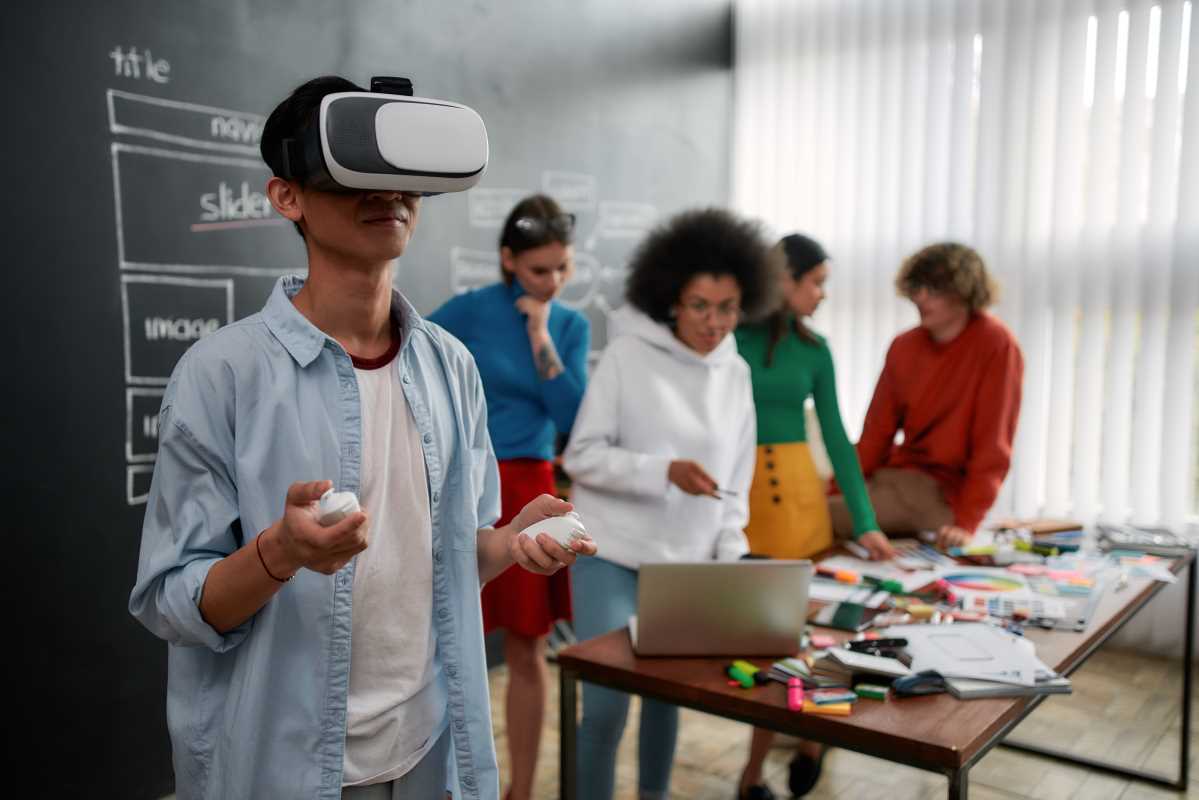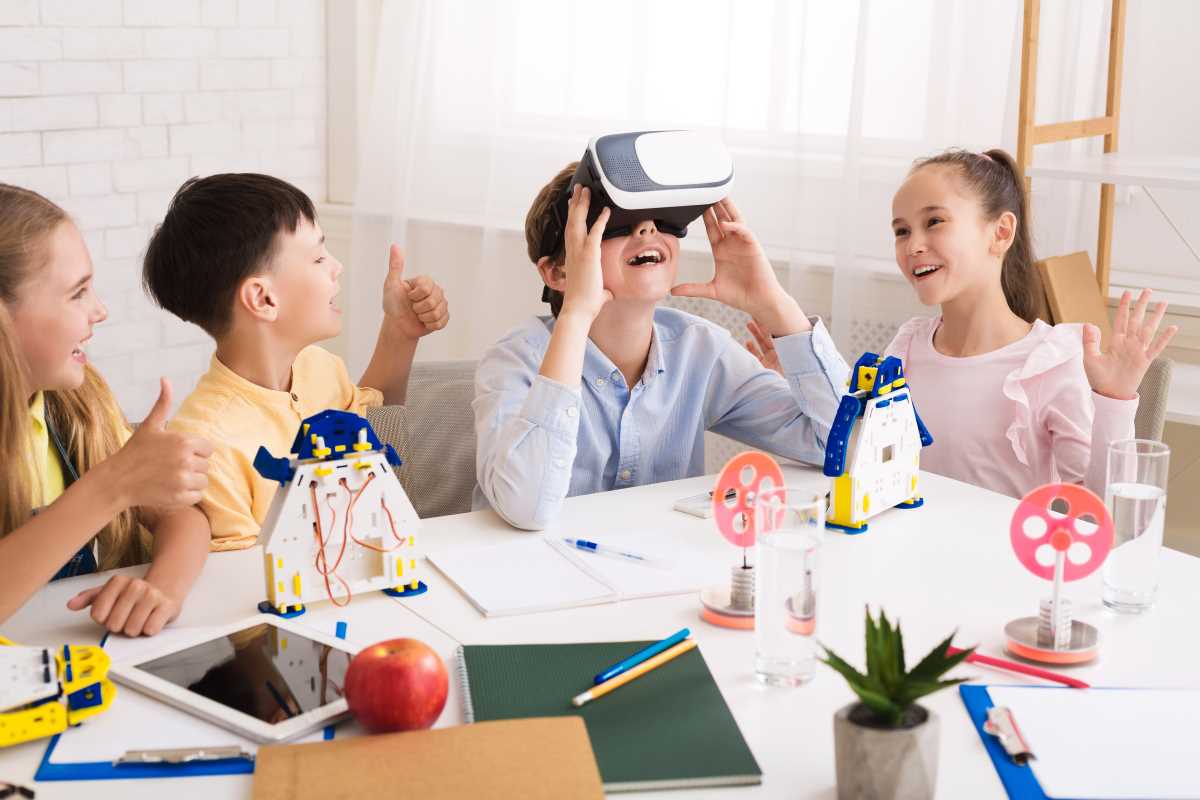
The classic school science lab, with its distinct smell of Bunsen burners and formaldehyde, has long been the cornerstone of hands-on education. But what happens when students can't physically be there? The challenge of providing meaningful, practical science experience remotely has led to an incredible innovation: the virtual reality lab. These immersive platforms are more than just fancy simulations, they are fully interactive environments where students can conduct experiments, manipulate complex equipment, and visualize abstract concepts in ways that a textbook never could. It is about making science accessible, safe, and exciting, regardless of location.
These remote VR labs offer a solution to the limitations of physical resources, safety concerns, and geographical barriers. A student in a rural classroom can suddenly have access to a multi-million-dollar molecular biology lab without leaving their seat. They can spill virtual chemicals without consequence, repeat complex procedures until they achieve mastery, and explore scientific principles at a microscopic level. This technology is transforming science education from a passive observation into an active, engaging experience, creating a new generation of curious and confident scientists.
Labster
Labster has established itself as a titan in the world of virtual science education, offering a massive library of over three hundred realistic lab simulations. This platform allows students to step into high-tech laboratories and perform experiments ranging from basic chemistry titrations to advanced CRISPR gene editing. The experience is designed to be curriculum-aligned, making it easy for educators to integrate into existing lesson plans. Labster’s secret sauce is its blend of gamified learning and storytelling, which keeps students engaged while they tackle complex scientific procedures. It turns learning into a mission, not just a lecture.
The platform provides a safe space for failure, which is a critical part of the scientific process. Students can make mistakes, see the consequences in a controlled environment, and try again until they understand the concepts fully. This trial-and-error approach builds deep conceptual understanding and practical skills. For educators, Labster offers a powerful dashboard to track student progress and identify areas where they might be struggling. It’s a comprehensive tool that democratizes access to world-class lab equipment and fosters genuine scientific inquiry.
Victoryxr
VictoryXR focuses on creating a complete "metaversity" experience, building digital twin campuses and synchronous learning environments where students and instructors interact as avatars. Their suite of science labs is a key component of this vision, offering collaborative, multi-user experiences. Instead of a solitary simulation, students can work together in real time, handing virtual tools to one another and discussing results as if they were in the same physical room. This social dimension is crucial for developing the teamwork and communication skills that are essential in modern scientific research.
The labs themselves are impressively detailed, covering subjects like anatomy, chemistry, and physics with a high degree of realism. Imagine dissecting a virtual cadaver with a group of classmates or collaborating on a physics experiment to understand the principles of momentum. VictoryXR’s approach moves beyond simple content delivery to create a true sense of presence and community. It replicates the social and interactive nature of a real-world lab, making remote science education feel less remote and more connected.
Beyond Labz
Beyond Labz provides a suite of open-ended virtual labs that give students remarkable freedom to experiment. Unlike more guided simulations, this platform encourages authentic scientific inquiry by allowing students to design and carry out their own experiments. The virtual labs for chemistry, physics, and biology are stocked with hundreds of chemicals and pieces of equipment, letting students ask "what if?" and immediately see the results. It is less of a video game and more of a digital sandbox for aspiring scientists, where curiosity is the main driver of learning.
This approach helps develop critical thinking and problem-solving skills, as students aren't just following a set of predetermined steps. They must formulate a hypothesis, design a procedure, collect data, and draw their own conclusions, just like a real scientist. The platform records every action in a digital lab notebook, providing a complete record of the student's work. Beyond Labz empowers learners to take ownership of their education, fostering an environment of discovery that bridges the gap between theoretical knowledge and practical application.
PraxiLabs
Hailing from the MENA region but serving a global audience, PraxiLabs offers realistic 3D virtual science labs with a focus on accessibility. The platform can be accessed through a web browser, reducing the need for high-end VR hardware and making it available to a wider range of schools and students. The labs provide an immersive and interactive experience, complete with multimedia educational content, to help explain the theoretical concepts behind the experiments. It aims to make hands-on science education not just engaging but also universally available.
PraxiLabs provides a rich array of simulations in biology, chemistry, and physics, allowing students to perform experiments that would be too dangerous or expensive for a typical school setting. The platform’s interactivity, combined with immediate feedback and assessments, helps reinforce learning objectives effectively. By providing unlimited and safe access to virtual lab benches, PraxiLabs enables students to practice and perfect their techniques at their own pace, boosting their confidence and competence in scientific procedures. It is a powerful tool for enriching science education and sparking a passion for discovery.
Virtuallab
Virtuallab specializes in creating highly realistic and interactive chemistry simulations that run directly in a browser. This platform is focused on making complex chemical concepts and laboratory techniques intuitive and understandable through direct manipulation. Students can mix chemicals, adjust heating elements, and observe reactions with a level of detail that mirrors a real-world laboratory. The emphasis is on realism and accuracy, ensuring that the virtual experiments align closely with the outcomes one would expect in a physical lab setting.
The platform’s strength lies in its ability to visualize the invisible. Students can zoom in to the molecular level to see how atoms and molecules are interacting during a chemical reaction, providing a powerful visual aid for abstract concepts. Virtuallab’s browser-based accessibility removes technical barriers, allowing for easy integration into any chemistry curriculum. It serves as an excellent pre-lab tool to prepare students for physical experiments or as a complete replacement when access to a real lab is not possible, ensuring that no student misses out on the practical side of chemistry.